Stage 04 · Run · Researched comparison
Best Kubernetes Manifest Validators in 2026
kubeconform is the first pick for most teams. It validates manifests against Kubernetes and custom resource schemas, runs as a single binary, and works well in CI. For policy rules beyond schema checks, Kyverno and OPA Gatekeeper are the alternatives to consider. For a hosted check inside a cluster, the Kubescape CLI covers a different part of the job.

By Shihab Mia
Published 22 Nov 2026 · 6 tools compared
We run no ads and no affiliate links at launch. The order of a list follows our published method. See how we score.
Prices are the starting prices vendors list publicly. Plans change, so confirm the current price on the vendor page before you buy.
Key takeaways
- kubeconform is free and open source, validates against multiple schema versions, and runs offline against local schema files.
- Kyverno and OPA Gatekeeper are free and open source and enforce policy, not just schema shape.
- Hosted validators send manifest content to a third party; keep secrets out of manifests or validate locally.
Who each pick is for
- Fast schema validation in CI and locallykubeconform
- Policy checks that match cluster admission rulesKyverno CLI
- Teams already standardized on RegoOPA Gatekeeper
- Scanning manifests and clusters against security frameworksKubescape
- Rego-based checks on any config fileConftest
- Catching deprecated API versions before upgradesPluto
Comparison
| Tool | Best for | Standout feature | Listed starting price | Free plan or trial |
|---|---|---|---|---|
| 1kubeconform | Fast schema validation in CI and locally | Single binary with no cluster needed | Free (open source) | Free plan |
| 2Kyverno CLI | Policy checks that match cluster admission rules | Same policies run in CI and in the cluster | Free (open source) | Free plan |
| 3OPA Gatekeeper | Teams already standardized on Rego | Rego is expressive and reusable across systems | Free (open source) | Free plan |
| 4Kubescape | Scanning manifests and clusters against security frameworks | Checks against NSA/CISA and MITRE frameworks | Free (open source) | Free plan |
| 5Conftest | Rego-based checks on any config file | Works on Kubernetes YAML and other config formats | Free (open source) | Free plan |
| 6Pluto | Catching deprecated API versions before upgrades | Detects removed and deprecated APIs | Free (open source) | Free plan |
How we picked
We picked tools that validate Kubernetes manifests for schema correctness, policy compliance or API deprecation. Criteria were fit for the job, supported platforms, licence and price, whether validation can run locally, and known limits such as maintenance status. Sources are vendor documentation, project repositories and public pricing pages. We did not run benchmarks or collect user reviews. Prices and plan limits change, so confirm them on the vendor site before you commit.
The tools, one by one
kubeconform
Best for fast schema validation in CI and locally
What it is and where it fits
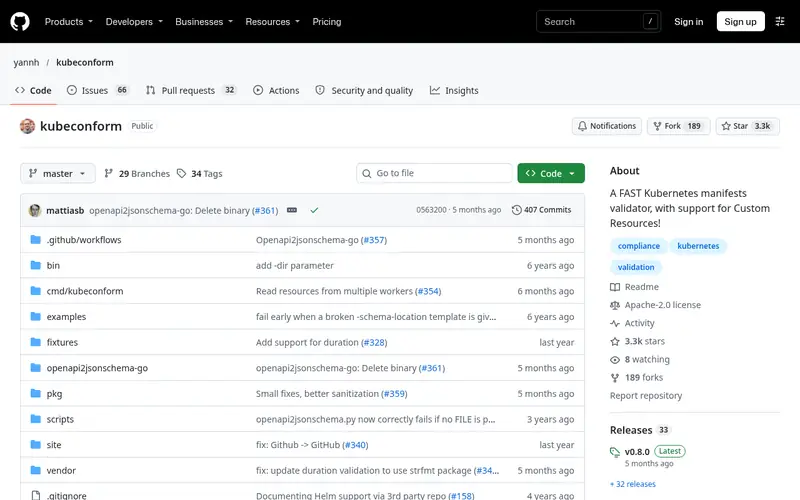
kubeconform validates Kubernetes manifests against JSON schemas. It checks apiVersion, kind and field types, and reports errors with file and line context. It supports several Kubernetes versions at once, so you can test a manifest against the cluster version you run and the next one you plan to upgrade to. It handles CustomResourceDefinitions when you point it at the right schema location.
It runs as a standalone binary on Linux, macOS and Windows, and as a container image. There is no server component and no account. Because it works from local files and schema caches, it fits air-gapped pipelines.
Use it when you want a fast gate in CI or a pre-commit hook. Skip it if you need to enforce naming conventions, resource limits or label rules; that is policy work for Kyverno or Gatekeeper.
Standout: Single binary with no cluster needed
Free (open source), as listed by the vendor (kubeconform website). Confirm the current plan price before you buy.
Free plan. Plans change, so confirm on the vendor's pricing page before you buy.
Benefits
- Single binary with no cluster needed
- supports multiple Kubernetes versions and CRDs
Drawbacks
- Schema checks only, no policy rules
- needs schema sources for custom resources
Skip it if this limit matters to you: schema checks only, no policy rules.
Verdict. A sensible pick for fast schema validation in CI and locally.
Alternatives in this guide: Kyverno CLI, OPA Gatekeeper, Kubescape
Kyverno CLI
Best for policy checks that match cluster admission rules
What it is and where it fits
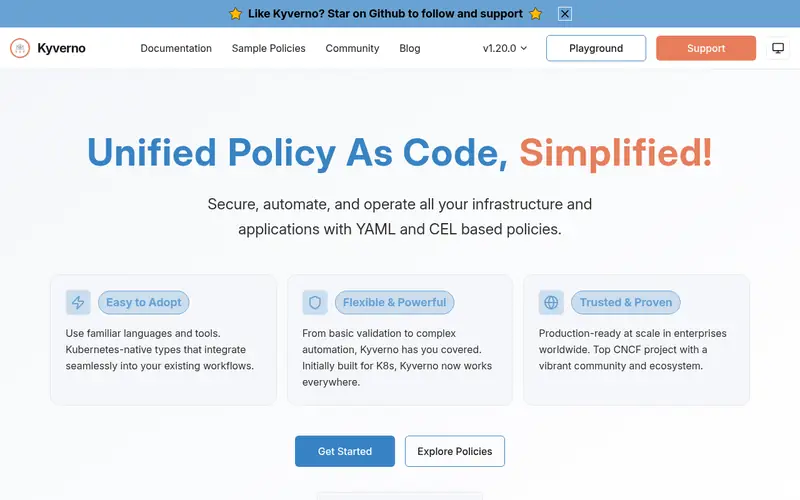
Kyverno is a policy engine for Kubernetes. The Kyverno CLI applies the same policies you run in the cluster to local manifests, so CI results match admission behavior. Policies can require labels, block latest tags, enforce resource limits or mutate manifests.
Policies are written as Kubernetes resources in YAML, which keeps them familiar. The project publishes a policy library you can adapt. The CLI runs on Linux, macOS and Windows.
It is free and open source under the Apache 2.0 license. It is more complex than kubeconform because it evaluates rules, not just schema shape. Choose it when you want one policy set for CI and the cluster. Skip it for a quick syntax check.
Standout: Same policies run in CI and in the cluster
Free (open source), as listed by the vendor (Kyverno CLI website). Confirm the current plan price before you buy.
Free plan. Plans change, so confirm on the vendor's pricing page before you buy.
Benefits
- Same policies run in CI and in the cluster
- broad policy library
Drawbacks
- Policy language has a learning curve
- heavier than a schema checker
Skip it if this limit matters to you: policy language has a learning curve.
Verdict. A sensible pick for policy checks that match cluster admission rules.
Alternatives in this guide: kubeconform, OPA Gatekeeper, Kubescape
OPA Gatekeeper
Best for teams already standardized on Rego
What it is and where it fits
OPA Gatekeeper is a Kubernetes admission controller built on the Open Policy Agent. Policies are written in Rego and applied as constraint templates and constraints. It is a common choice where an organization already uses OPA for other systems and wants one policy language.
For manifest validation before apply, you can run OPA directly against manifests with the same Rego policies, though the mapping between local runs and cluster admission takes setup. Gatekeeper itself runs in the cluster and audits existing resources.
It is free and open source. It suits platform teams with Rego experience. Teams without that background often find Kyverno faster to adopt.
Standout: Rego is expressive and reusable across systems
Free (open source), as listed by the vendor (OPA Gatekeeper website). Confirm the current plan price before you buy.
Free plan. Plans change, so confirm on the vendor's pricing page before you buy.
Benefits
- Rego is expressive and reusable across systems
- strong admission control
Drawbacks
- Rego has a steep learning curve
- local validation needs extra setup
Skip it if this limit matters to you: rego has a steep learning curve.
Verdict. A sensible pick for teams already standardized on Rego.
Alternatives in this guide: kubeconform, Kyverno CLI, Kubescape
Kubescape
Best for scanning manifests and clusters against security frameworks
What it is and where it fits
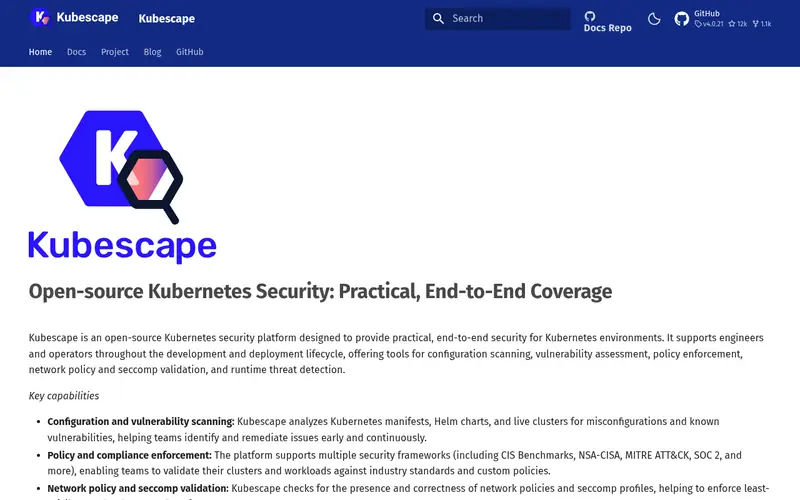
Kubescape is an open-source tool from ARMO. It scans Kubernetes clusters, YAML files and Helm charts against security and compliance frameworks, including NSA/CISA hardening guidance and MITRE ATT&CK for Kubernetes. It reports misconfigurations such as missing resource limits, privileged containers and weak defaults.
It runs as a CLI on Linux, macOS and Windows, and can run in-cluster. Results can be exported for CI gates. The CLI is free and open source. A commercial offering from ARMO adds hosted features; check the vendor page for current terms.
Use it when your goal is security posture, not just schema validity. It complements kubeconform rather than replacing it.
Standout: Checks against NSA/CISA and MITRE frameworks
Free (open source), as listed by the vendor (Kubescape website). Confirm the current plan price before you buy.
Free plan. Plans change, so confirm on the vendor's pricing page before you buy.
Benefits
- Checks against NSA/CISA and MITRE frameworks
- scans clusters and files
Drawbacks
- Security-focused rather than pure schema validation
- output needs interpretation
Skip it if this limit matters to you: security-focused rather than pure schema validation.
Verdict. A sensible pick for scanning manifests and clusters against security frameworks.
Alternatives in this guide: kubeconform, Kyverno CLI, OPA Gatekeeper
Conftest
Best for rego-based checks on any config file
What it is and where it fits
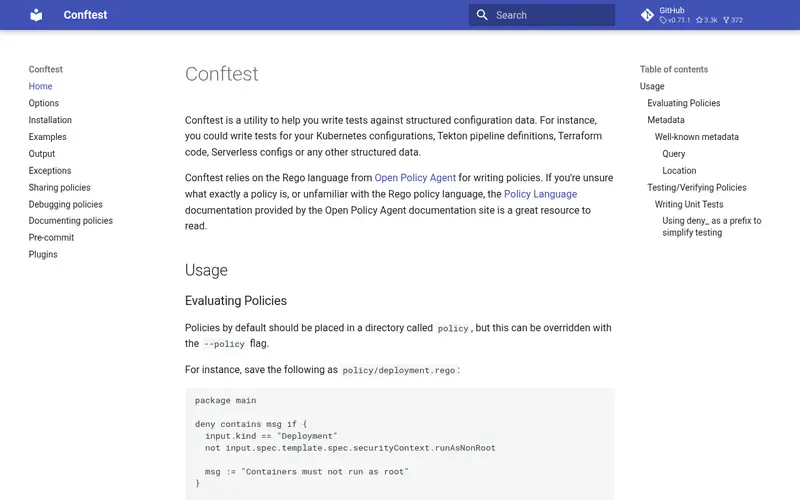
Conftest is an open-source tool from the Open Policy Agent project. It runs Rego policies against structured config files, including Kubernetes manifests, Dockerfiles and Terraform plans. You write the policies and run them locally or in CI.
It does not ship Kubernetes schemas, so it handles policy rules rather than field-level schema validation. Pair it with kubeconform when you need both.
It is free and open source and runs as a single binary on Linux, macOS and Windows. It suits teams that want one policy tool across multiple config types and are comfortable with Rego.
Standout: Works on Kubernetes YAML and other config formats
Free (open source), as listed by the vendor (Conftest website). Confirm the current plan price before you buy.
Free plan. Plans change, so confirm on the vendor's pricing page before you buy.
Benefits
- Works on Kubernetes YAML and other config formats
- simple CLI
Drawbacks
- Requires writing Rego
- no built-in Kubernetes schema set
Skip it if this limit matters to you: requires writing Rego.
Verdict. A sensible pick for rego-based checks on any config file.
Alternatives in this guide: kubeconform, Kyverno CLI, OPA Gatekeeper
Pluto
Best for catching deprecated API versions before upgrades
What it is and where it fits
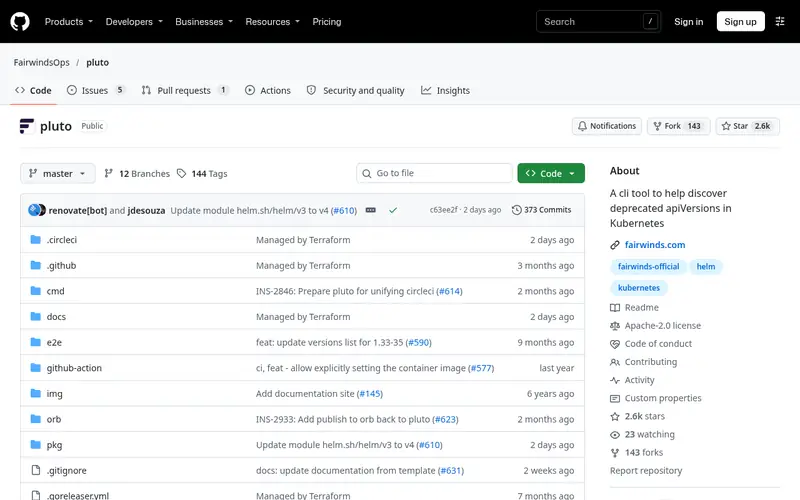
Pluto from Fairwinds detects deprecated and removed Kubernetes API versions in manifests, Helm releases and live clusters. It helps before a cluster upgrade, when removed APIs break applies.
It runs as a CLI on Linux, macOS and Windows and can output results for CI. It is free and open source.
Pluto answers one question well: is this apiVersion still supported? It does not replace schema or policy validation. Use it alongside kubeconform in upgrade preparation.
Standout: Detects removed and deprecated APIs
Free (open source), as listed by the vendor (Pluto website). Confirm the current plan price before you buy.
Free plan. Plans change, so confirm on the vendor's pricing page before you buy.
Benefits
- Detects removed and deprecated APIs
- scans files and live clusters
Drawbacks
- Narrow scope
- does not validate full schema or policy
Skip it if this limit matters to you: narrow scope.
Verdict. A sensible pick for catching deprecated API versions before upgrades.
Alternatives in this guide: kubeconform, Kyverno CLI, OPA Gatekeeper
Who should use what
A developer who wants a fast syntax and schema gate in CI should start with kubeconform. A platform team that needs one policy set for CI and cluster admission should evaluate Kyverno CLI or OPA Gatekeeper, depending on whether the team already writes Rego. A security team scanning for misconfigurations across clusters and files should look at Kubescape. A team preparing a cluster upgrade should add Pluto to catch removed APIs.
Questions to settle before you buy
What to check before you buy
- Confirm the tool validates the Kubernetes versions you run and plan to upgrade to.
- Check how custom resources are handled; schema sources for CRDs differ by tool.
- Decide whether you need schema checks, policy rules or both, and pick tools accordingly.
- Verify the tool runs offline or locally if manifests contain sensitive values.
- Review licence, pricing and maintenance status, and confirm details on the official page.
FAQ
Do I need more than one validator?
Often yes. Schema validation catches malformed fields, while policy tools catch rules like missing limits or banned image tags. Many teams run kubeconform for schema and Kyverno or Conftest for policy in the same pipeline.
Can these tools validate Helm charts?
Some can. Kubescape scans Helm charts directly. For others, render the chart with helm template first, then validate the output YAML with kubeconform or your policy tool.
Are hosted validators safe for private manifests?
Treat any hosted validator as a third party. Manifests can contain secrets, internal hostnames and image registry details. Prefer local or offline tools, and keep secrets out of manifests using Secret references and external secret stores.
Do these tools replace server-side validation?
No. Client-side checks catch errors early, but the API server remains the authority. Admission controllers and server-side dry runs still apply. Use client-side validators to fail fast, not as the only gate.
How do these tools fit into a CI pipeline?
Run kubeconform as an early schema gate, then run Kyverno CLI, OPA Gatekeeper policies or Conftest for policy rules, and add Pluto before cluster upgrades. Each tool exits non-zero on failure, so they chain naturally as pipeline steps.
Sources we checked
Method: how we score · editorial policy.
Change log. First published 22 Nov 2026.