Stage 01 · Write · Researched comparison
Best Elixir JSON Libraries in 2026
Jason is the first pick for most Elixir projects. It is a pure Elixir library, widely used across the ecosystem, and works on every platform Elixir runs on. If you are on Elixir 1.18 or later, the built-in JSON module covers encode and decode without a dependency. For very large payloads where raw speed matters, jiffy is a NIF-based option, and Thoas suits code that wants a protocol-driven, streaming encoder.

By Shihab Mia
Published 27 Nov 2026 · 5 tools compared
We run no ads and no affiliate links at launch. The order of a list follows our published method. See how we score.
Prices are the starting prices vendors list publicly. Plans change, so confirm the current price on the vendor page before you buy.
Key takeaways
- Jason is a pure Elixir library and the common default for JSON encode and decode in most projects.
- Elixir 1.18 and later ship a built-in JSON module, so simple cases need no extra dependency.
- jiffy uses an Erlang NIF for speed but adds a native build step and a C dependency.
- Thoas offers a protocol-based, streaming encoder for code that needs chunked output.
Who each pick is for
- Most Elixir projects that need a reliable JSON libraryJason
- Projects on Elixir 1.18+ that want no extra dependencyElixir JSON module (Elixir 1.18+)
- Erlang and Elixir apps that need fast JSON on large payloadsjiffy
- Code that wants a protocol-based, streaming JSON encoderThoas
- Erlang and Elixir projects on OTP 27+ that want a standard moduleErlang/OTP json module
Comparison
| Tool | Best for | Standout feature | Listed starting price | Free plan or trial |
|---|---|---|---|---|
| 1Jason | Most Elixir projects that need a reliable JSON library | Pure Elixir, so no native build step | Free (open source) | Free plan |
| 2Elixir JSON module (Elixir 1.18+) | Projects on Elixir 1.18+ that want no extra dependency | Ships with Elixir, so nothing to add | Free (open source) | Free plan |
| 3jiffy | Erlang and Elixir apps that need fast JSON on large payloads | NIF-based, so fast on large inputs | Free (open source) | Free plan |
| 4Thoas | Code that wants a protocol-based, streaming JSON encoder | Streaming encoder that writes output in chunks | Free (open source) | Free plan |
| 5Erlang/OTP json module | Erlang and Elixir projects on OTP 27+ that want a standard module | Part of OTP 27 and later, so no dependency | Free (open source) | Free plan |
How we picked
We picked libraries that encode and decode JSON and are usable from Elixir, then compared them on fit for common jobs, platform and build requirements, licence and price, and main limits such as streaming support or native code. Sources are vendor documentation, Hexdocs pages and project repositories. Prices and version requirements change, so confirm details on the official page before you commit.
The tools, one by one
Jason
Best for most Elixir projects that need a reliable JSON library
What it is and where it fits
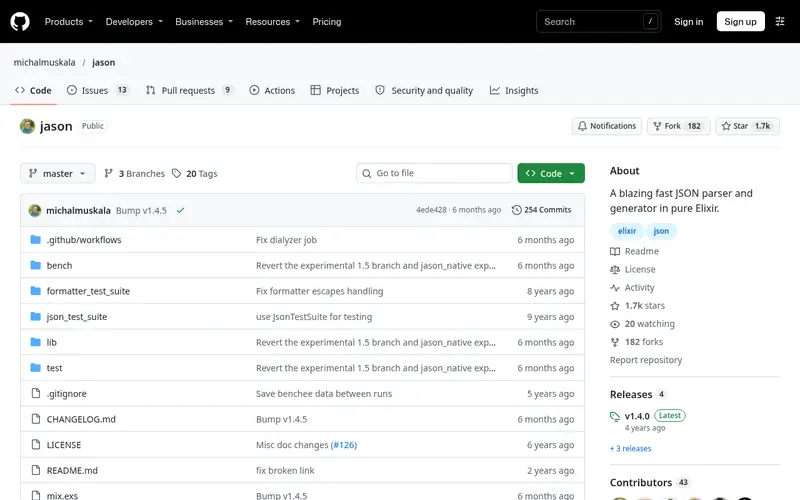
Jason is a pure Elixir JSON parser and encoder. It provides `Jason.encode/1` and `Jason.decode/1`, plus bang variants that raise on error. You can derive encoders for structs with `@derive Jason.Encoder`, or write your own implementation of the `Jason.Encoder` protocol. Decoding returns maps with string keys by default, and you can request atom keys where needed.
Because it is pure Elixir, Jason runs wherever Elixir runs, including releases built on any platform, with no compiler or C toolchain at build time. It is a dependency of many other libraries, so it is often already in your lockfile. The project is open source and free to use. It does not offer a streaming decoder, so for very large documents that you cannot hold in memory, look at a streaming option or split the input yourself.
Standout: Pure Elixir, so no native build step
Free (open source), as listed by the vendor (Jason website). Confirm the current plan price before you buy.
Free plan. Plans change, so confirm on the vendor's pricing page before you buy.
Benefits
- Pure Elixir, so no native build step
- implements the Jason.Encoder protocol for custom types
Drawbacks
- No streaming decode
- not the fastest option for very large payloads
Skip it if this limit matters to you: no streaming decode.
Verdict. A sensible pick for most Elixir projects that need a reliable JSON library.
Alternatives in this guide: Elixir JSON module (Elixir 1.18+), jiffy, Thoas
Elixir JSON module (Elixir 1.18+)
Best for projects on Elixir 1.18+ that want no extra dependency
What it is and where it fits
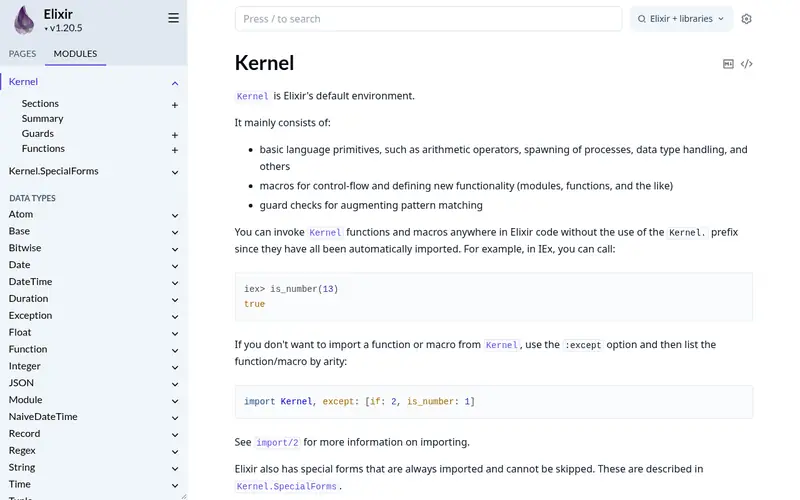
Elixir 1.18 added a `JSON` module to the standard library. It provides `JSON.encode/1` and `JSON.decode/1`, along with a protocol for encoding custom structs. For projects already on a recent Elixir version, this removes the need for a separate JSON dependency in simple cases.
The trade-off is version support. If your project must run on Elixir versions before 1.18, or if a library you depend on expects Jason, you will still need Jason. The built-in module is free and part of the language, so there is no licence or pricing question. Check the module documentation for the exact protocol name and options before you migrate existing code.
Standout: Ships with Elixir, so nothing to add
Free (open source), as listed by the vendor (Elixir JSON module (Elixir 1.18+) website). Confirm the current plan price before you buy.
Free plan. Plans change, so confirm on the vendor's pricing page before you buy.
Benefits
- Ships with Elixir, so nothing to add
- consistent API with encode and decode functions
Drawbacks
- Only available on Elixir 1.18 and later
- fewer third-party integrations than Jason
Skip it if this limit matters to you: only available on Elixir 1.18 and later.
Verdict. A sensible pick for projects on Elixir 1.18+ that want no extra dependency.
jiffy
Best for erlang and Elixir apps that need fast JSON on large payloads
What it is and where it fits
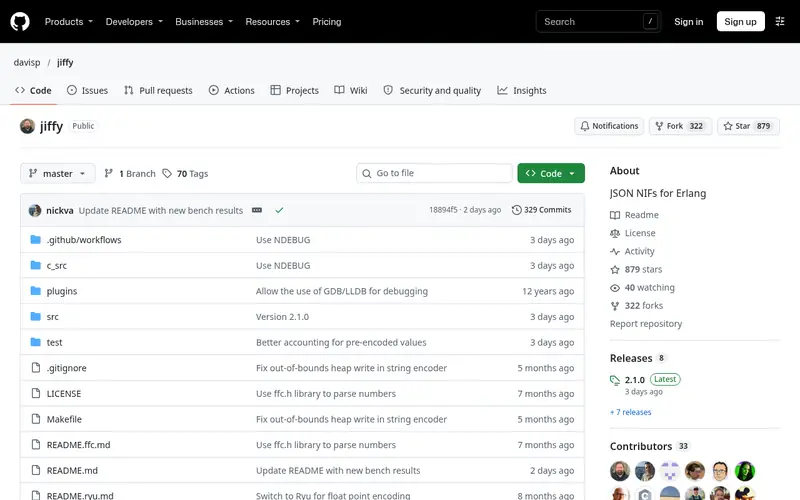
jiffy is an Erlang JSON library implemented as a NIF, with a C component. It is used from Elixir through its Erlang API. Because the parsing happens in native code, it can be faster than pure Elixir libraries on large payloads.
The cost is the build. You need a C compiler and the Erlang build tools when compiling jiffy, which complicates cross-platform releases and some container setups. NIFs also run inside the VM, so a bug in native code can crash the whole node rather than one process. It is free and open source. Choose it when you have measured a need for speed and can manage the native build.
Standout: NIF-based, so fast on large inputs
Free (open source), as listed by the vendor (jiffy website). Confirm the current plan price before you buy.
Free plan. Plans change, so confirm on the vendor's pricing page before you buy.
Benefits
- NIF-based, so fast on large inputs
- long-standing Erlang library
Drawbacks
- Requires a C compiler at build time
- NIF crashes can affect the whole VM
Skip it if this limit matters to you: requires a C compiler at build time.
Verdict. A sensible pick for erlang and Elixir apps that need fast JSON on large payloads.
Alternatives in this guide: Jason, Elixir JSON module (Elixir 1.18+), Thoas
Thoas
Best for code that wants a protocol-based, streaming JSON encoder
What it is and where it fits
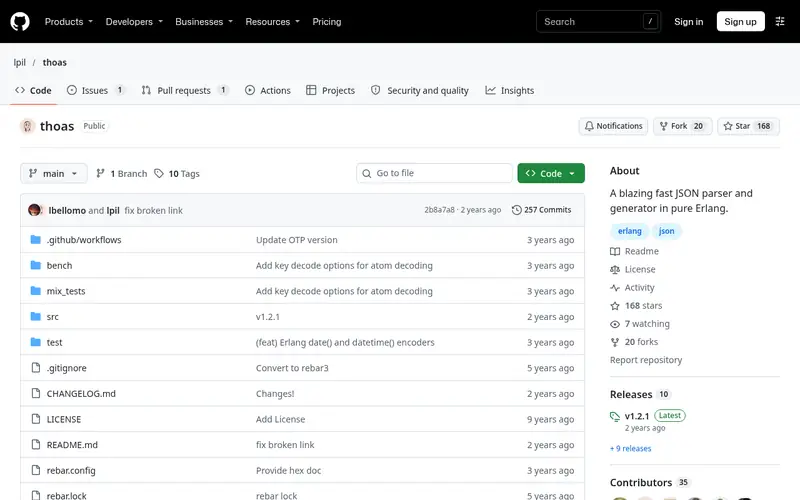
Thoas is a JSON library from Louis Pilfold. It focuses on encoding through a protocol, and it can stream output in chunks rather than building one large string. That helps when you encode large structures and want to avoid holding the full result in memory.
It is pure Elixir and free to use. The project is smaller than Jason, so fewer libraries assume it and you may write more of your own encoder implementations. It is a reasonable fit if streaming encode is a real requirement in your app. For straightforward encode and decode, Jason or the built-in module are simpler defaults.
Standout: Streaming encoder that writes output in chunks
Free (open source), as listed by the vendor (Thoas website). Confirm the current plan price before you buy.
Free plan. Plans change, so confirm on the vendor's pricing page before you buy.
Benefits
- Streaming encoder that writes output in chunks
- protocol-based design
Drawbacks
- Smaller user base than Jason
- less suitable if you want a single all-in-one library
Skip it if this limit matters to you: smaller user base than Jason.
Verdict. A sensible pick for code that wants a protocol-based, streaming JSON encoder.
Alternatives in this guide: Jason, Elixir JSON module (Elixir 1.18+), jiffy
Erlang/OTP json module
Best for erlang and Elixir projects on OTP 27+ that want a standard module
What it is and where it fits
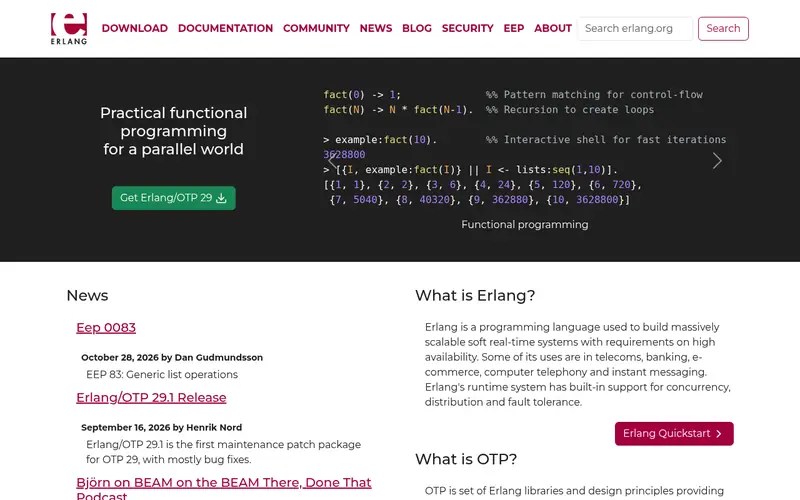
Erlang/OTP 27 added a `json` module to the standard library. It provides encode and decode functions that you can call from Elixir as `:json.encode/1` and `:json.decode/1`. For projects already on OTP 27 or later, this is a standard-library option with no extra dependency.
The API is Erlang-style, so it looks different from Jason or the Elixir `JSON` module. If your codebase mixes Erlang and Elixir, a shared standard module can simplify things. It is free and part of OTP. Projects on older OTP versions cannot use it, and teams that want the Elixir protocol-based encoder will likely stay with Jason or the built-in module.
Standout: Part of OTP 27 and later, so no dependency
Free (open source), as listed by the vendor (Erlang/OTP json module website). Confirm the current plan price before you buy.
Free plan. Plans change, so confirm on the vendor's pricing page before you buy.
Benefits
- Part of OTP 27 and later, so no dependency
- usable from Elixir directly
Drawbacks
- Requires OTP 27 or later
- API differs from the common Elixir libraries
Skip it if this limit matters to you: requires OTP 27 or later.
Verdict. A sensible pick for erlang and Elixir projects on OTP 27+ that want a standard module.
Alternatives in this guide: Jason, Elixir JSON module (Elixir 1.18+), jiffy
Who should use what
If you are starting a new Elixir project on a version before 1.18, use Jason. If you are on Elixir 1.18 or later and want no extra dependency, the built-in `JSON` module is enough for simple cases. If you have measured that large payloads need native speed and you can manage a C build, try jiffy. If you encode large structures and want chunked output, look at Thoas.
Questions to settle before you buy
What to check before you buy
- Confirm which Elixir and OTP versions your project must support.
- Check whether the library needs a C compiler or native build step in your release pipeline.
- Decide whether you need streaming encode or decode, or only whole-document calls.
- Check how custom structs are encoded and whether the protocol fits your code.
- Confirm the licence and read the repository activity before adding a dependency.
FAQ
Is Jason still the default JSON library for Elixir?
Jason remains the most common choice for new Elixir projects and is a dependency of many libraries. On Elixir 1.18 and later, the built-in `JSON` module is a valid alternative for simple encode and decode. Many teams keep Jason for its protocol and ecosystem fit.
Do I need a JSON library on Elixir 1.18 or later?
Not always. Elixir 1.18 added a `JSON` module to the standard library, so simple cases need no extra dependency. You may still add Jason if a library you use expects it or if you want its encoder protocol. Check your dependencies first.
Is jiffy faster than pure Elixir libraries?
jiffy is a NIF with native code, so it can be faster on large payloads. That depends on your data and setup, and you should measure it in your own app. The native build adds a C compiler requirement and NIF crash risk, so weigh that against any speed gain.
Can I use the Erlang json module from Elixir?
Yes. On OTP 27 or later, call `:json.encode/1` and `:json.decode/1` from Elixir. The API is Erlang-style and differs from Jason and the Elixir `JSON` module. It is a good fit if your codebase mixes Erlang and Elixir.
When should I choose Thoas over Jason?
Choose Thoas when streaming encode is a real requirement and you want output written in chunks rather than one large string. For straightforward encode and decode, Jason or the built-in `JSON` module are simpler defaults.
Sources we checked
Method: how we score · editorial policy.
Change log. First published 27 Nov 2026.