Stage 02 · Test · Researched comparison
6 Best Node.js Authentication Libraries in 2026
Auth.js is the first pick for most teams building session-based login in Next.js or a Node.js server, because it ships many OAuth providers and database adapters under an open-source licence. Passport.js remains the safer choice for Express apps that need dozens of pluggable strategies. Better Auth suits teams that want a TypeScript-first library with built-in email, password and social login plus an admin layer, without a hosted vendor.

By Shihab Mia
Published 27 Nov 2026 · 6 tools compared
We run no ads and no affiliate links at launch. The order of a list follows our published method. See how we score.
Prices are the starting prices vendors list publicly. Plans change, so confirm the current price on the vendor page before you buy.
Key takeaways
- Auth.js, Passport.js, Better Auth and openid-client are free and open source; you host and operate them yourself.
- Clerk and Auth0 are hosted services with SDKs for Node.js; their entry prices change, so check the vendor pricing page.
- Self-hosted libraries keep user records in your own database, which matters for data residency and audit rules.
Who each pick is for
- Next.js and Node.js apps that need many OAuth providersAuth.js
- Express and Connect apps that need pluggable strategiesPassport.js
- TypeScript teams that want a full auth feature set self-hostedBetter Auth
- Node.js services that need a certified OpenID Connect clientopenid-client
- Teams that want hosted auth with prebuilt UI componentsClerk
- Enterprises that need a managed identity platform with policy controlsAuth0
Comparison
| Tool | Best for | Standout feature | Listed starting price | Free plan or trial |
|---|---|---|---|---|
| 1Auth.js | Next.js and Node.js apps that need many OAuth providers | Large provider list | Free (open source) | Free plan |
| 2Passport.js | Express and Connect apps that need pluggable strategies | Very large strategy ecosystem | Free (open source) | Free plan |
| 3Better Auth | TypeScript teams that want a full auth feature set self-hosted | TypeScript-first with typed client and server APIs | Free (open source) | Free plan |
| 4openid-client | Node.js services that need a certified OpenID Connect client | Certified OpenID Connect relying party implementation | Free (open source) | Free plan |
| 5Clerk | Teams that want hosted auth with prebuilt UI components | Prebuilt sign-in and user management UI | See vendor pricing page | Free trial (No fixed length stated) |
| 6Auth0 | Enterprises that need a managed identity platform with policy controls | Broad protocol support including OIDC, SAML and social | See vendor pricing page | Free trial (No fixed length stated) |
How we picked
We picked libraries and SDKs that genuinely handle authentication for Node.js applications, then compared them on fit for common jobs, supported frameworks and runtimes, licence and price model, where user data is stored, and the main limits each one states. Sources are vendor documentation, project repositories and public pricing pages. Prices and free-tier limits change, so confirm them on the vendor site before you commit.
The tools, one by one
Auth.js
Best for next.js and Node.js apps that need many OAuth providers
What it is and where it fits
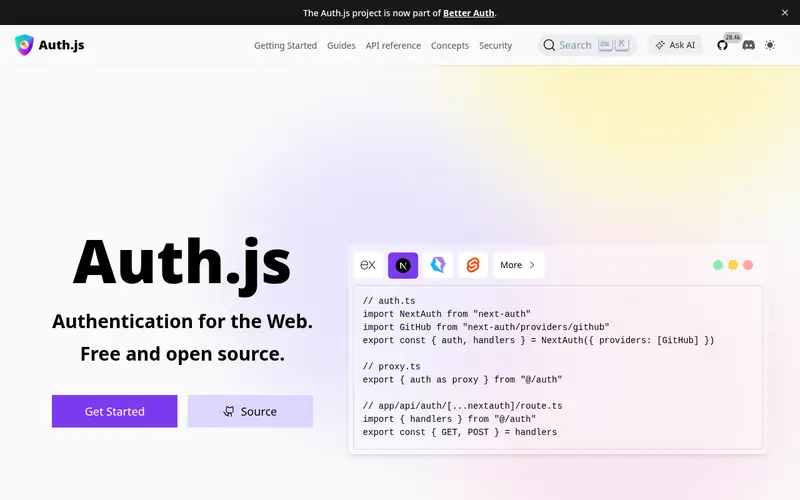
Auth.js is the current name of the project formerly called NextAuth.js. It handles OAuth and OIDC sign-in, email magic links, and credential login, and it stores sessions either in a database through an adapter or in a signed cookie. It runs inside Next.js route handlers and also works with other frameworks through its core package.
The project is open source and free to use. You supply your own database, OAuth client credentials and secrets. Adapters exist for Prisma, Drizzle, MongoDB, Postgres and others, so the data stays in your infrastructure. The main cost is setup time and the need to read the callback documentation carefully.
Skip Auth.js if you need a vendor to manage user records, MFA policy and support contracts, or if your app is a plain Express service where Passport.js fits with less wiring.
Standout: Large provider list
Free (open source), as listed by the vendor (Auth.js website). Confirm the current plan price before you buy.
Free plan. Plans change, so confirm on the vendor's pricing page before you buy.
Benefits
- Large provider list
- adapters for common databases and ORMs
Drawbacks
- Configuration is spread across callbacks and adapters
- breaking changes between major versions
Skip it if this limit matters to you: configuration is spread across callbacks and adapters.
Verdict. A sensible pick for next.js and Node.js apps that need many OAuth providers.
Alternatives in this guide: Passport.js, Better Auth, openid-client
Passport.js
Best for express and Connect apps that need pluggable strategies
What it is and where it fits
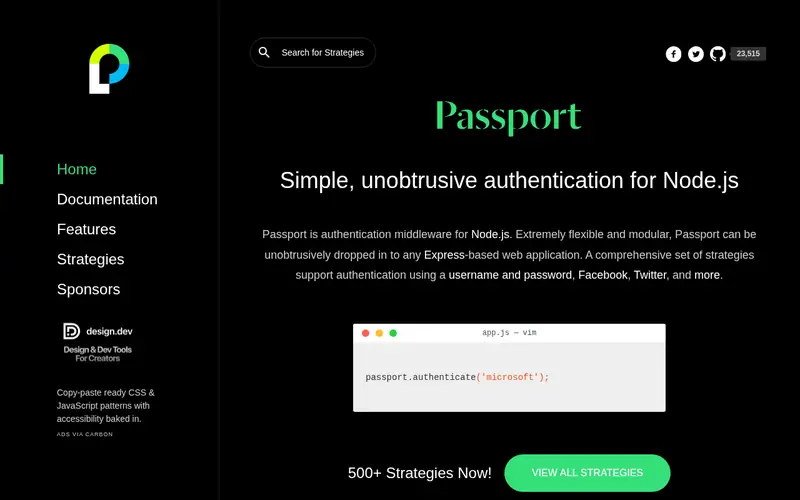
Passport.js is middleware for Express and Connect. It does not decide how you store users. Instead, each strategy handles one method, such as a local password check, Google OAuth, SAML or a bearer token, and Passport calls your verify callback to turn a profile into a user.
The library is open source and free. You choose the session store, the password hashing library and the token format yourself. That flexibility is the point, but it also means security decisions land on your team. Strategy packages vary in quality and maintenance, so check the repository activity before you depend on one.
Passport.js is a poor fit if you want batteries-included features such as email verification, password reset flows or an admin UI. It gives you the authentication plumbing, not the surrounding product.
Standout: Very large strategy ecosystem
Free (open source), as listed by the vendor (Passport.js website). Confirm the current plan price before you buy.
Free plan. Plans change, so confirm on the vendor's pricing page before you buy.
Benefits
- Very large strategy ecosystem
- minimal core with a stable API
Drawbacks
- Session and serialization setup is manual
- many strategies are community-maintained with uneven update cadence
Skip it if this limit matters to you: session and serialization setup is manual.
Verdict. A sensible pick for express and Connect apps that need pluggable strategies.
Alternatives in this guide: Auth.js, Better Auth, openid-client
Better Auth
Best for typeScript teams that want a full auth feature set self-hosted
What it is and where it fits
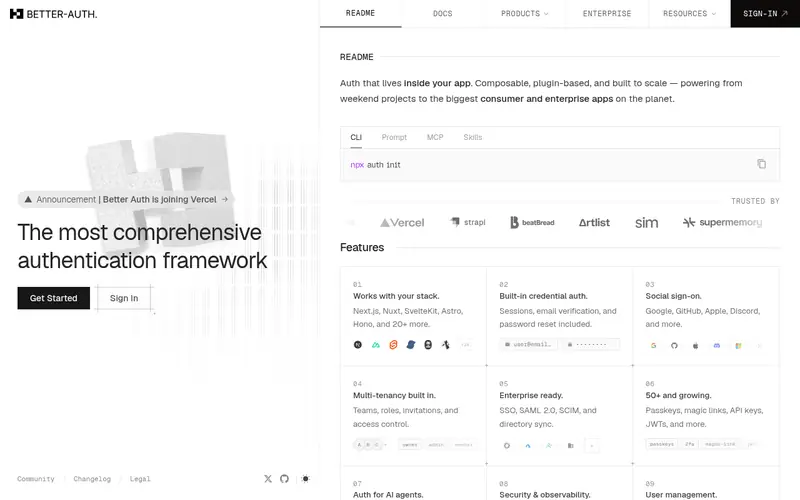
Better Auth is an open-source authentication library for TypeScript and Node.js. It covers email and password, social OAuth providers, session management, two-factor authentication and organization or admin plugins. It generates a database schema you can apply with your migration tool.
The library is free and self-hosted. It works with common frameworks and ORMs, and it exposes a client SDK so front-end code gets typed calls. Because it is newer than the older libraries, expect API changes and read the changelog before upgrading across minor versions.
Choose Better Auth when you want one library to cover login, sessions and account management without a hosted vendor. Skip it if you need a long track record or a vendor support contract.
Standout: TypeScript-first with typed client and server APIs
Free (open source), as listed by the vendor (Better Auth website). Confirm the current plan price before you buy.
Free plan. Plans change, so confirm on the vendor's pricing page before you buy.
Benefits
- TypeScript-first with typed client and server APIs
- built-in email, password, social login and plugin system
Drawbacks
- Younger project than Passport.js or Auth.js
- feature set is still expanding
Skip it if this limit matters to you: younger project than Passport.js or Auth.js.
Verdict. A sensible pick for typeScript teams that want a full auth feature set self-hosted.
Alternatives in this guide: Auth.js, Passport.js, openid-client
openid-client
Best for node.js services that need a certified OpenID Connect client
What it is and where it fits
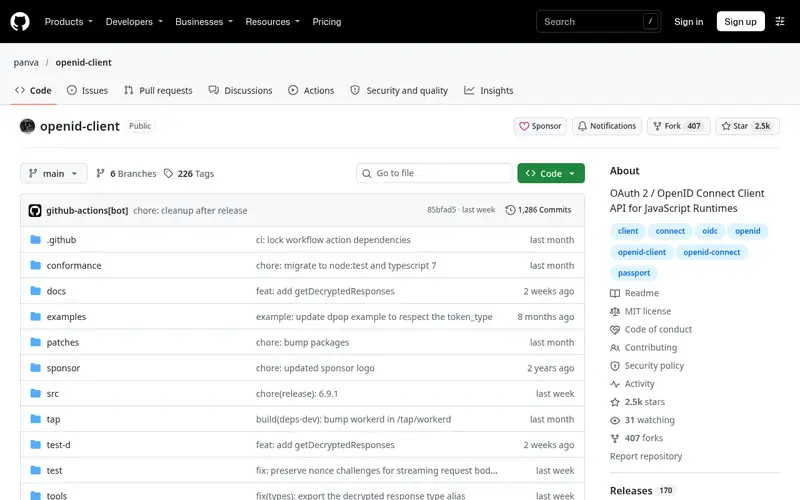
openid-client is a low-level OpenID Connect and OAuth 2 client for Node.js. It handles discovery, PKCE, token exchange, token refresh and ID token validation. It is certified by the OpenID Foundation as a relying party implementation.
It is open source and free. It does not store users or sessions for you, so you pair it with your own database and session middleware. That makes it a good fit for back-end services, CLIs and APIs that must talk to an identity provider such as Keycloak, Okta or a corporate IdP.
Skip openid-client if you want a ready-made login page and account flows. It is a protocol client, and the surrounding application work is yours to write.
Standout: Certified OpenID Connect relying party implementation
Free (open source), as listed by the vendor (openid-client website). Confirm the current plan price before you buy.
Free plan. Plans change, so confirm on the vendor's pricing page before you buy.
Benefits
- Certified OpenID Connect relying party implementation
- low-level control over the authorization flow
Drawbacks
- Not a full user management system
- you build session handling and storage
Skip it if this limit matters to you: not a full user management system.
Verdict. A sensible pick for node.js services that need a certified OpenID Connect client.
Alternatives in this guide: Auth.js, Passport.js, Better Auth
Clerk
Best for teams that want hosted auth with prebuilt UI components
What it is and where it fits
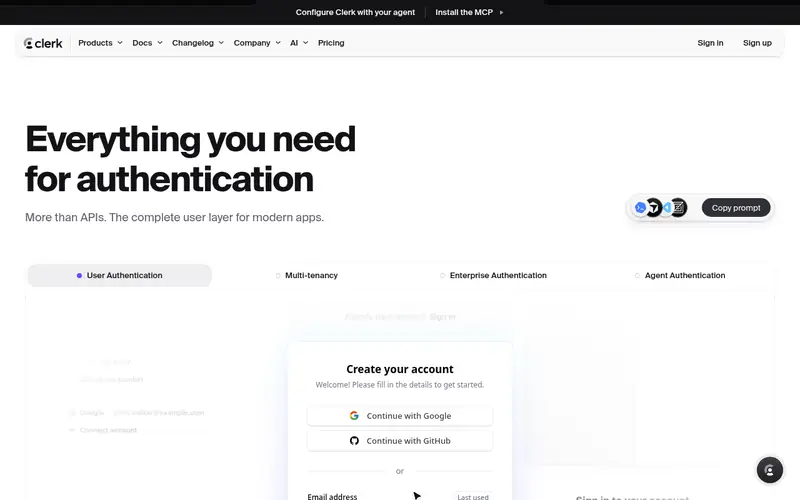
Clerk is a hosted authentication and user management service. It provides prebuilt sign-in, sign-up and user profile components, plus a Node.js SDK and middleware for popular frameworks. You configure providers in a dashboard instead of writing OAuth flows.
Clerk is a paid service with a free tier whose limits the vendor defines; check the pricing page for current numbers. Your user records are stored on Clerk's infrastructure, so review the data processing terms if you have residency or audit requirements.
Choose Clerk when you want to ship login quickly and accept a vendor dependency. Skip it if you must keep all identity data in your own database.
Standout: Prebuilt sign-in and user management UI
See vendor pricing page, as listed by the vendor (Clerk website). Confirm the current plan price before you buy.
Free trial (No fixed length stated). Plans change, so confirm on the vendor's pricing page before you buy.
Benefits
- Prebuilt sign-in and user management UI
- Node.js SDK and framework middleware
Drawbacks
- User records live with the vendor
- costs scale with monthly active users
Skip it if this limit matters to you: user records live with the vendor.
Verdict. A sensible pick for teams that want hosted auth with prebuilt UI components.
Alternatives in this guide: Auth.js, Passport.js, Better Auth
Auth0
Best for enterprises that need a managed identity platform with policy controls
What it is and where it fits
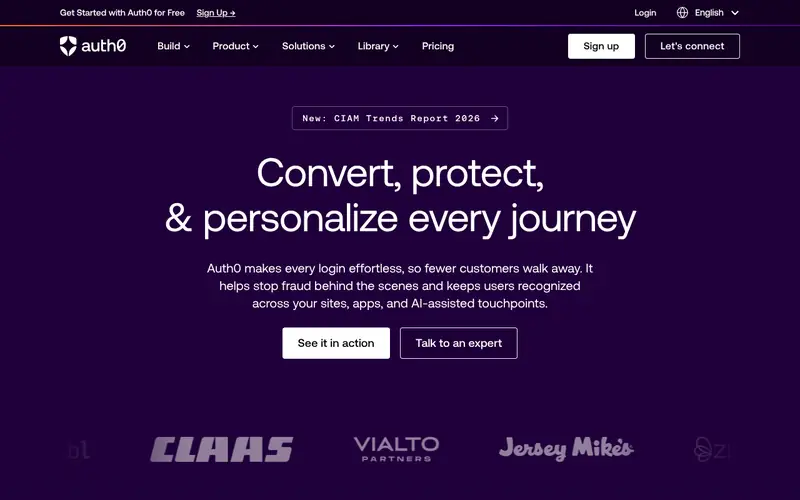
Auth0 is a managed identity platform from Okta. It supports OIDC, OAuth 2, SAML and social providers, and it offers a Node.js SDK plus middleware for Express and other frameworks. Rules and actions let you customize token issuance.
Auth0 is a paid service with a free tier whose limits the vendor sets; confirm current terms on the pricing page. Identity data and policy configuration live with the vendor, which simplifies operations but adds a dependency and a data processing review.
Pick Auth0 when you need enterprise SSO, MFA policy and vendor support. Skip it for small internal tools where a self-hosted library is cheaper and simpler.
Standout: Broad protocol support including OIDC, SAML and social
See vendor pricing page, as listed by the vendor (Auth0 website). Confirm the current plan price before you buy.
Free trial (No fixed length stated). Plans change, so confirm on the vendor's pricing page before you buy.
Benefits
- Broad protocol support including OIDC, SAML and social
- Node.js SDK and management API
Drawbacks
- Pricing is usage-based and can rise with active users and features
- configuration lives in the vendor dashboard
Skip it if this limit matters to you: pricing is usage-based and can rise with active users and features.
Verdict. A sensible pick for enterprises that need a managed identity platform with policy controls.
Alternatives in this guide: Auth.js, Passport.js, Better Auth
Who should use what
A Next.js team adding Google and GitHub login should start with Auth.js. An Express API with existing user tables fits Passport.js. A TypeScript product that wants email, password, social login and admin roles in one package should evaluate Better Auth. A back-end service that must trust a corporate identity provider should use openid-client. Teams that want login shipped fast and accept a vendor holding user records should compare Clerk and Auth0 on the pricing page.
Questions to settle before you buy
What to check before you buy
- Confirm the library is actively maintained by checking recent commits and releases in its repository.
- Check that adapters or strategies exist for your database and framework versions.
- Decide where user records will live, and confirm that matches your data residency and audit rules.
- Review how sessions are stored and signed, and set cookie flags for your deployment.
- Read the licence terms if you plan to modify and redistribute the code.
FAQ
Do I need a paid service to add authentication to Node.js?
No. Auth.js, Passport.js, Better Auth and openid-client are free and open source. You pay in setup time and in hosting your own database. Hosted services such as Clerk and Auth0 charge for managed user records and support, so compare their pricing pages against your expected user count.
Is Passport.js still maintained?
Yes. Passport.js and its core strategies receive updates, though individual strategy packages are maintained by different people. Check the repository for the specific strategy you need before you depend on it, since update cadence varies across the ecosystem.
Can I use these libraries with Express, Fastify or Next.js?
Passport.js targets Express and Connect. Auth.js works inside Next.js and through its core package elsewhere. Better Auth and openid-client are framework-agnostic and run on Node.js. Check each project's documentation for the framework you use before starting.
Should I self-host auth or use a hosted provider?
Self-hosting keeps user records in your database and avoids per-user fees, but your team owns security updates and operations. A hosted provider moves that work to the vendor and adds a dependency plus a data processing review. Pick based on team size, compliance needs and budget.
How do I migrate between these authentication libraries?
Map your existing user records and session model to the target library's schema first, then run both systems in parallel behind a feature flag so you can roll back. Test password hashing and token validation paths carefully, since each library handles credentials and sessions differently.
Sources we checked
Method: how we score · editorial policy.
Change log. First published 27 Nov 2026.