Stage 02 · Test · Researched comparison
Best JSON Schema Generators in 2026
quicktype is the first pick for most developers because it turns sample JSON, JSON Schema and many language types into schemas and typed models across a wide set of targets. GenSON suits Python teams that want to merge several JSON samples into one schema. typescript-json-schema fits TypeScript projects that already define interfaces and want a schema generated from them.

By Shihab Mia
Published 22 Nov 2026 · 7 tools compared
We run no ads and no affiliate links at launch. The order of a list follows our published method. See how we score.
Prices are the starting prices vendors list publicly. Plans change, so confirm the current price on the vendor page before you buy.
Key takeaways
- quicktype handles sample JSON and many languages, and it ships as a CLI, a library and a web app.
- GenSON is a Python tool that builds and merges schemas from multiple JSON documents.
- typescript-json-schema and ts-json-schema-generator both read TypeScript types, so they fit code-first teams.
- Online generators are convenient, but do not paste secrets, tokens or production data into third-party pages.
Who each pick is for
- Generating schemas and typed models from sample JSONquicktype
- Python users building schemas from several JSON samplesGenSON
- TypeScript projects that want a schema from existing typestypescript-json-schema
- Generating schemas from TypeScript with broad type supportts-json-schema-generator
- Python teams using models as the schema sourcePydantic
- JavaScript and TypeScript projects that define data with Zodzod-to-json-schema
- Quick browser-based schema generation from sample JSONjsonschema.net
Comparison
| Tool | Best for | Standout feature | Listed starting price | Free plan or trial |
|---|---|---|---|---|
| 1quicktype | Generating schemas and typed models from sample JSON | Accepts sample JSON, JSON Schema and several type languages | Free (open source) | Free plan |
| 2GenSON | Python users building schemas from several JSON samples | Merges multiple JSON documents into one schema | Free (open source) | Free plan |
| 3typescript-json-schema | TypeScript projects that want a schema from existing types | Reads TypeScript interfaces and types directly | Free (open source) | Free plan |
| 4ts-json-schema-generator | Generating schemas from TypeScript with broad type support | Handles many advanced TypeScript type constructs | Free (open source) | Free plan |
| 5Pydantic | Python teams using models as the schema source | Models double as validation and schema source | Free (open source) | Free plan |
| 6zod-to-json-schema | JavaScript and TypeScript projects that define data with Zod | Converts existing Zod schemas to JSON Schema | Free (open source) | Free plan |
| 7jsonschema.net | Quick browser-based schema generation from sample JSON | Runs in the browser with no install | See vendor pricing page | Free plan |
How we picked
We picked tools that genuinely generate JSON Schema from sample JSON, code types or a data model, and left out validators and catalogs. Criteria were fit for the job, supported platforms, price and licence, whether generation can run locally, and the main limits of each tool. Sources are vendor pages, documentation and project repositories. Prices and plan limits change, so confirm them on the vendor site before you commit.
The tools, one by one
quicktype
Best for generating schemas and typed models from sample JSON
What it is and where it fits
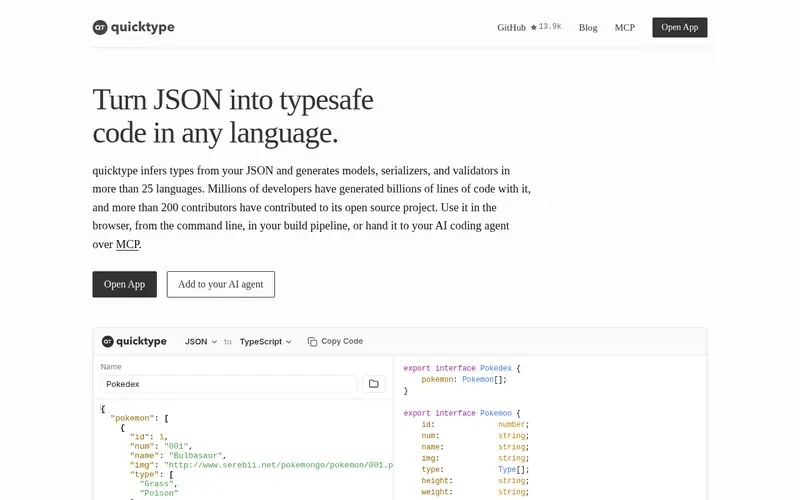
quicktype generates JSON Schema and typed models from sample JSON, JSON Schema, TypeScript and other inputs. It runs as a command-line tool, a JavaScript library and a hosted web app. The project is open source, and the CLI works offline once installed.
The output covers many target languages, so it is useful when a schema and client models must stay in step. Large or inconsistent samples can produce loose schemas, so review the result before you commit it. The web app is convenient, but treat it as a third-party page and keep secrets and production data out of it. Teams that need a single offline path should use the CLI.
Standout: Accepts sample JSON, JSON Schema and several type languages
Free (open source), as listed by the vendor (quicktype website). Confirm the current plan price before you buy.
Free plan. Plans change, so confirm on the vendor's pricing page before you buy.
Benefits
- Accepts sample JSON, JSON Schema and several type languages
- outputs schemas and models for many targets
Drawbacks
- Output for large, messy samples needs review
- the web app sends your input to a server
Skip it if this limit matters to you: output for large, messy samples needs review.
Verdict. A sensible pick for generating schemas and typed models from sample JSON.
Alternatives in this guide: GenSON, typescript-json-schema, ts-json-schema-generator
GenSON
Best for python users building schemas from several JSON samples
What it is and where it fits
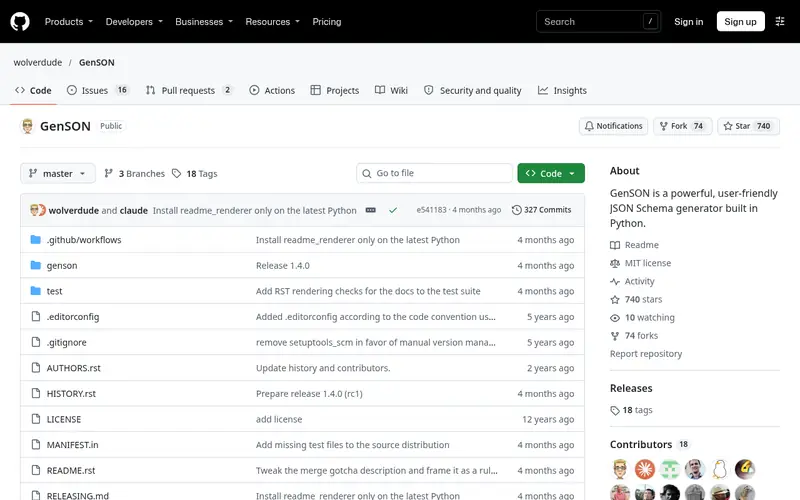
GenSON is a Python library and command-line tool that builds JSON Schema from JSON objects. Its main feature is merging: you feed it several sample documents and it combines them into one schema, which helps when a single sample misses optional fields.
It runs wherever Python runs and installs from PyPI. The project is open source under the MIT licence. Generated schemas tend to be permissive, so add required fields and constraints by hand if you need strict validation. It suits Python teams that collect real payloads and want a schema that reflects them. Developers outside Python should look elsewhere.
Standout: Merges multiple JSON documents into one schema
Free (open source), as listed by the vendor (GenSON website). Confirm the current plan price before you buy.
Free plan. Plans change, so confirm on the vendor's pricing page before you buy.
Benefits
- Merges multiple JSON documents into one schema
- usable as a CLI or a Python library
Drawbacks
- Python only
- output favors permissive schemas over strict validation
Skip it if this limit matters to you: python only.
Verdict. A sensible pick for python users building schemas from several JSON samples.
Alternatives in this guide: quicktype, typescript-json-schema, ts-json-schema-generator
typescript-json-schema
Best for typeScript projects that want a schema from existing types
What it is and where it fits
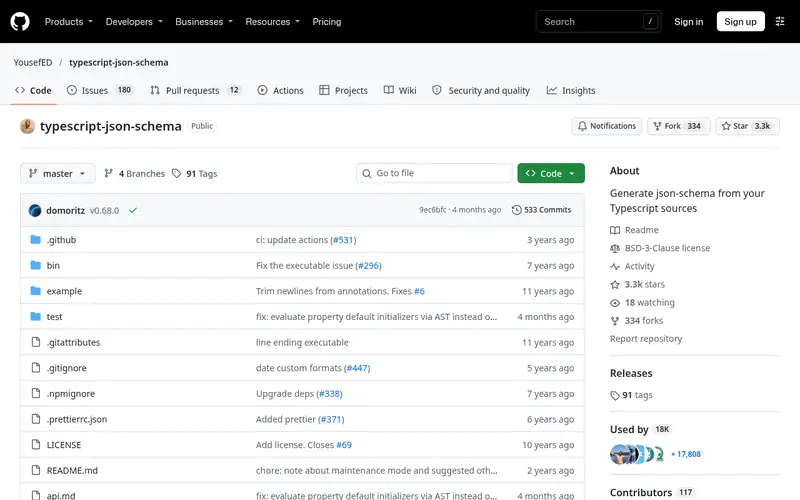
typescript-json-schema generates JSON Schema from TypeScript source files. You point it at a tsconfig and a type name, and it produces a schema for that type. It runs as a command-line tool and as a library, and it installs from npm.
This fits code-first teams where TypeScript types are the source of truth and the schema is a build artifact. It handles interfaces, unions and enums, but very complex generic or conditional types can need JSDoc annotations to come out right. It is open source and works offline. Teams not using TypeScript should skip it.
Standout: Reads TypeScript interfaces and types directly
Free (open source), as listed by the vendor (typescript-json-schema website). Confirm the current plan price before you buy.
Free plan. Plans change, so confirm on the vendor's pricing page before you buy.
Benefits
- Reads TypeScript interfaces and types directly
- runs as a CLI or a library
Drawbacks
- Tied to TypeScript
- complex generics and conditional types may need annotations
Skip it if this limit matters to you: tied to TypeScript.
Verdict. A sensible pick for typeScript projects that want a schema from existing types.
Alternatives in this guide: quicktype, GenSON, ts-json-schema-generator
ts-json-schema-generator
Best for generating schemas from TypeScript with broad type support
What it is and where it fits
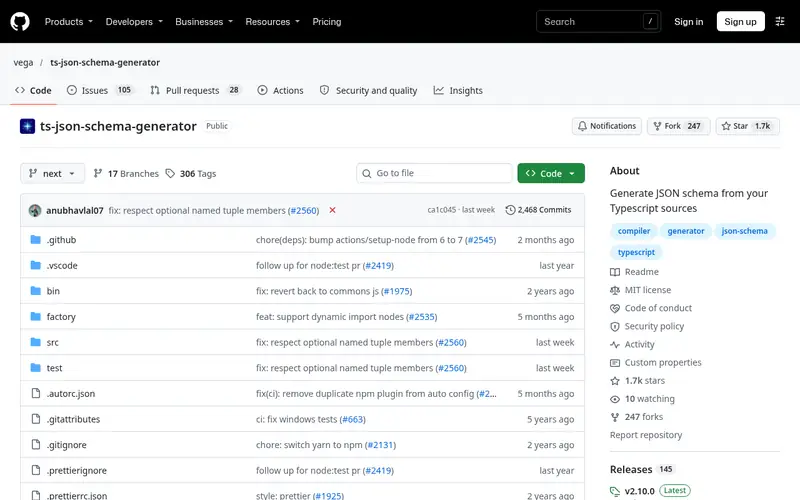
ts-json-schema-generator is another TypeScript-to-JSON-Schema tool, maintained under the Vega project. It reads a tsconfig, a type name and an output path, then writes a schema file. It aims to cover a wide range of TypeScript type features, including mapped and conditional types.
It installs from npm and runs as a CLI. The project is open source. Configuration options are extensive, which helps in large codebases but takes time to learn. It overlaps with typescript-json-schema; try both on your own types and keep the one that handles your edge cases. It is not useful outside TypeScript projects.
Standout: Handles many advanced TypeScript type constructs
Free (open source), as listed by the vendor (ts-json-schema-generator website). Confirm the current plan price before you buy.
Free plan. Plans change, so confirm on the vendor's pricing page before you buy.
Benefits
- Handles many advanced TypeScript type constructs
- configurable output and CLI options
Drawbacks
- TypeScript only
- configuration takes some reading
Skip it if this limit matters to you: typeScript only.
Verdict. A sensible pick for generating schemas from TypeScript with broad type support.
Alternatives in this guide: quicktype, GenSON, typescript-json-schema
Pydantic
Best for python teams using models as the schema source
What it is and where it fits
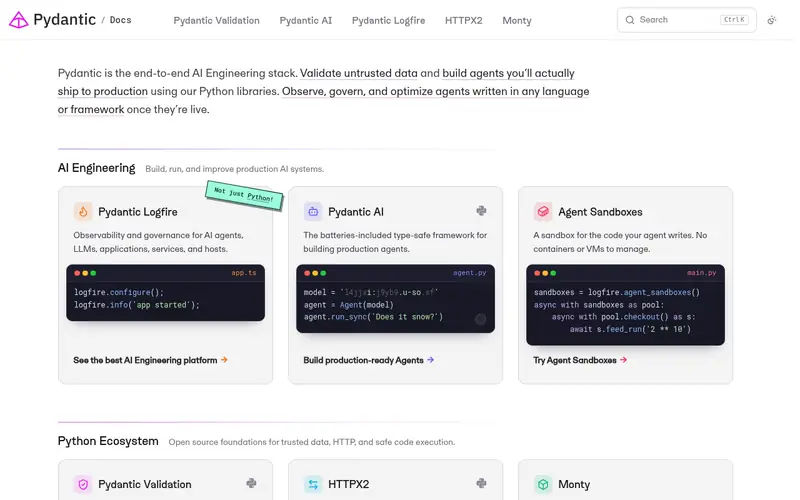
Pydantic is a Python data validation library. In version 2, each model exposes model_json_schema(), which returns a JSON Schema for that model. This makes the model the single source of truth for validation and for the schema you publish.
It runs wherever Python runs and installs from PyPI. The core library is open source under the MIT licence. The generated schema reflects Pydantic's conventions, so check that validators and custom types map the way you expect. It suits Python services that already validate input with models. Projects in other languages need a different tool.
Standout: Models double as validation and schema source
Free (open source), as listed by the vendor (Pydantic website). Confirm the current plan price before you buy.
Free plan. Plans change, so confirm on the vendor's pricing page before you buy.
Benefits
- Models double as validation and schema source
- model_json_schema() returns a schema dict
Drawbacks
- Requires defining models in Python
- output follows Pydantic's schema conventions
Skip it if this limit matters to you: requires defining models in Python.
Verdict. A sensible pick for python teams using models as the schema source.
Alternatives in this guide: quicktype, GenSON, typescript-json-schema
zod-to-json-schema
Best for javaScript and TypeScript projects that define data with Zod
What it is and where it fits
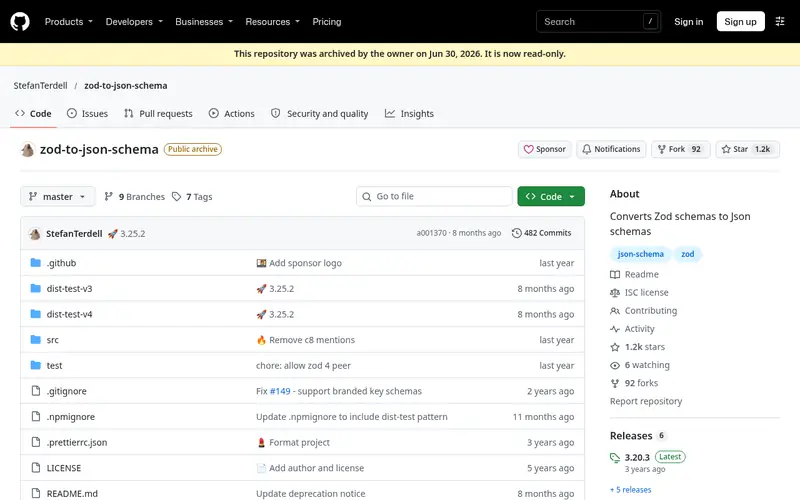
zod-to-json-schema converts Zod schemas into JSON Schema. If your app already validates input with Zod, this gives you a schema for docs, API contracts or form tooling without writing it twice. It installs from npm and works in Node and in the browser.
The project is open source. Conversion covers most Zod types, but transforms, refinements and some custom checks do not map cleanly to JSON Schema, so review the output. It suits TypeScript and JavaScript teams already on Zod. Teams using another validation library should look for its equivalent.
Standout: Converts existing Zod schemas to JSON Schema
Free (open source), as listed by the vendor (zod-to-json-schema website). Confirm the current plan price before you buy.
Free plan. Plans change, so confirm on the vendor's pricing page before you buy.
Benefits
- Converts existing Zod schemas to JSON Schema
- works in Node and the browser
Drawbacks
- Limited to what Zod can express
- some Zod features convert only partially
Skip it if this limit matters to you: limited to what Zod can express.
Verdict. A sensible pick for javaScript and TypeScript projects that define data with Zod.
Alternatives in this guide: quicktype, GenSON, typescript-json-schema
jsonschema.net
Best for quick browser-based schema generation from sample JSON
What it is and where it fits
jsonschema.net is an online generator that turns sample JSON into a JSON Schema in the browser. You paste JSON, adjust a few options such as required fields, and copy the schema out. It needs no install, which helps for a one-off task.
The site offers a free tier and paid plans; check the vendor pricing page for current limits. Because it is a hosted page, do not paste secrets, tokens or production data. For regular use, prefer a local tool such as quicktype or GenSON. It fits quick, non-sensitive jobs and developers who cannot install software.
Standout: Runs in the browser with no install
See vendor pricing page, as listed by the vendor (jsonschema.net website). Confirm the current plan price before you buy.
Free plan. Plans change, so confirm on the vendor's pricing page before you buy.
Benefits
- Runs in the browser with no install
- simple paste-and-generate flow
Drawbacks
- Input goes to a third-party site
- advanced options may sit behind a paid plan
Skip it if this limit matters to you: input goes to a third-party site.
Verdict. A sensible pick for quick browser-based schema generation from sample JSON.
Alternatives in this guide: quicktype, GenSON, typescript-json-schema
Who should use what
If you have sample JSON and want a schema plus typed models, start with quicktype. If you are in Python and have several payloads to merge, use GenSON. If your TypeScript types are the source of truth, try typescript-json-schema and ts-json-schema-generator on your own code. If you already validate with Pydantic or Zod, generate the schema from those models so you keep one definition. For a one-off job on non-sensitive data, a browser tool like jsonschema.net is enough.
Questions to settle before you buy
What to check before you buy
- Confirm the tool reads the input you actually have: sample JSON, code types or a model.
- Check that generation can run locally if your data is sensitive.
- Review the output for required fields and constraints; generators often produce permissive schemas.
- Confirm the licence and any paid tier limits on the vendor page.
- Test on a few real payloads, including ones with optional and nested fields.
FAQ
What is a JSON Schema generator?
A JSON Schema generator produces a JSON Schema document from another source, such as sample JSON, TypeScript types, Python models or Zod schemas. The schema then describes and can validate that data. Generators save you from writing the schema by hand, but the output usually needs review.
Can I generate a schema without sending data to a server?
Yes. Command-line tools such as quicktype, GenSON and typescript-json-schema run locally and work offline once installed. Browser-based generators send your input to a third-party site, so avoid pasting secrets, tokens or production data into them.
Which tool works from TypeScript types?
typescript-json-schema and ts-json-schema-generator both read TypeScript source and output JSON Schema. Try both on your own types, since they differ in how they handle advanced constructs such as conditional and mapped types.
Do generators produce strict schemas?
Often not. Tools that infer from samples tend to mark few fields as required and add loose constraints. Add required fields, types and validation rules by hand, or generate from a model that already encodes them, such as Pydantic or Zod.
Are these tools free?
Most listed tools are open source and free to use, including quicktype, GenSON, typescript-json-schema, ts-json-schema-generator, Pydantic and zod-to-json-schema. jsonschema.net offers a free tier with paid plans; check its pricing page for current limits.
Sources we checked
Method: how we score · editorial policy.
Change log. First published 22 Nov 2026.