Stage 01 · Write · Researched comparison
Best Python Configuration Libraries in 2026
pydantic-settings is the first pick for teams already using Pydantic models, because it validates settings from environment variables, .env files and secrets with clear type errors. Dynaconf suits projects that need layered config across environments. python-decouple is a lighter choice for small apps that only read .env files and environment variables. All three are open source and run on standard Python.

By Shihab Mia
Published 27 Nov 2026 · 7 tools compared
We run no ads and no affiliate links at launch. The order of a list follows our published method. See how we score.
Prices are the starting prices vendors list publicly. Plans change, so confirm the current price on the vendor page before you buy.
Key takeaways
- pydantic-settings, Dynaconf, python-decouple, Hydra, environs, python-dotenv and ConfigArgParse are all free and open source.
- pydantic-settings ties settings to typed models and reports validation errors at startup.
- Dynaconf supports layered settings files, environment switching and multiple file formats.
- python-dotenv and environs focus on environment variables and .env files, not full schema validation.
Who each pick is for
- Teams already using Pydantic models for typed settingspydantic-settings
- Apps that need layered config across multiple environmentsDynaconf
- Small projects that read .env files and environment variablespython-decouple
- Machine learning and research code with many config combinationsHydra
- Reading and validating environment variables with clear errorsenvirons
- Loading .env files into environment variables at startuppython-dotenv
- CLI tools that combine config files, env vars and argumentsConfigArgParse
Comparison
| Tool | Best for | Standout feature | Listed starting price | Free plan or trial |
|---|---|---|---|---|
| 1pydantic-settings | Teams already using Pydantic models for typed settings | Type validation on load | Free (open source) | Free plan |
| 2Dynaconf | Apps that need layered config across multiple environments | Layered settings files and environments | Free (open source) | Free plan |
| 3python-decouple | Small projects that read .env files and environment variables | Small API with cast helpers | Free (open source) | Free plan |
| 4Hydra | Machine learning and research code with many config combinations | Composes configs from multiple files | Free (open source) | Free plan |
| 5environs | Reading and validating environment variables with clear errors | Typed parsing with helpful error messages | Free (open source) | Free plan |
| 6python-dotenv | Loading .env files into environment variables at startup | Simple and widely used | Free (open source) | Free plan |
| 7ConfigArgParse | CLI tools that combine config files, env vars and arguments | Drop-in replacement for argparse | Free (open source) | Free plan |
How we picked
We compared libraries on fit for common configuration jobs: typed settings, environment variable loading, layered files and CLI overrides. We checked supported platforms, licence and price, how each handles secrets and .env files, and the main limits documented by each project. Sources are vendor documentation, project repositories and public pricing pages. All listed projects are open source with no paid tier. Prices and features change, so confirm details on the vendor site before you commit.
The tools, one by one
pydantic-settings
Best for teams already using Pydantic models for typed settings
What it is and where it fits
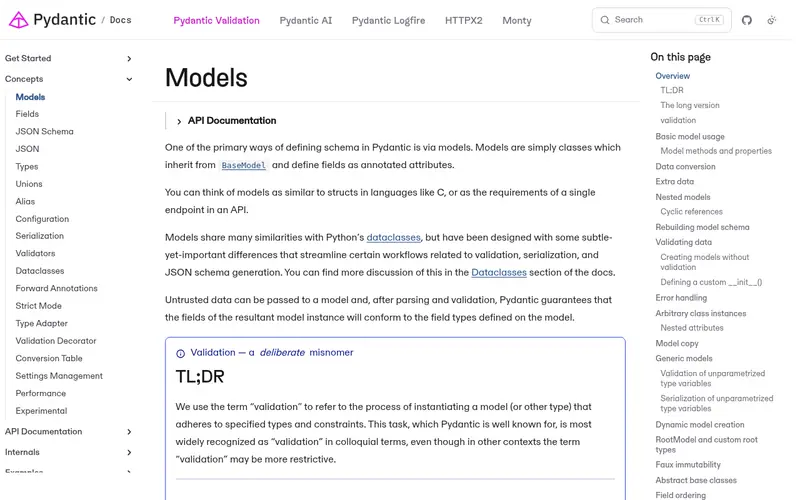
pydantic-settings is the settings layer for Pydantic v2. You define a settings class with typed fields, and the library loads values from environment variables, dotenv files, JSON and secret sources. Missing or malformed values raise validation errors at startup, which catches config mistakes early. It runs anywhere Python runs and works well in containers and CI.
The package is open source under the MIT license. It has no paid tier. The main limit is that it assumes you are comfortable with Pydantic models and type annotations. Small scripts that only need a few environment variables may find it more structure than they need.
Skip it if you want zero dependencies beyond the standard library, or if your team has not adopted Pydantic. It is the strongest fit when settings and request models already share the same validation style.
Standout: Type validation on load
Free (open source), as listed by the vendor (pydantic-settings website). Confirm the current plan price before you buy.
Free plan. Plans change, so confirm on the vendor's pricing page before you buy.
Benefits
- Type validation on load
- Reads env vars, .env files and secrets sources
Drawbacks
- Requires Pydantic v2 knowledge
- Heavier than a plain .env loader
Skip it if this limit matters to you: requires Pydantic v2 knowledge.
Verdict. A sensible pick for teams already using Pydantic models for typed settings.
Alternatives in this guide: Dynaconf, python-decouple, Hydra
Dynaconf
Best for apps that need layered config across multiple environments
What it is and where it fits
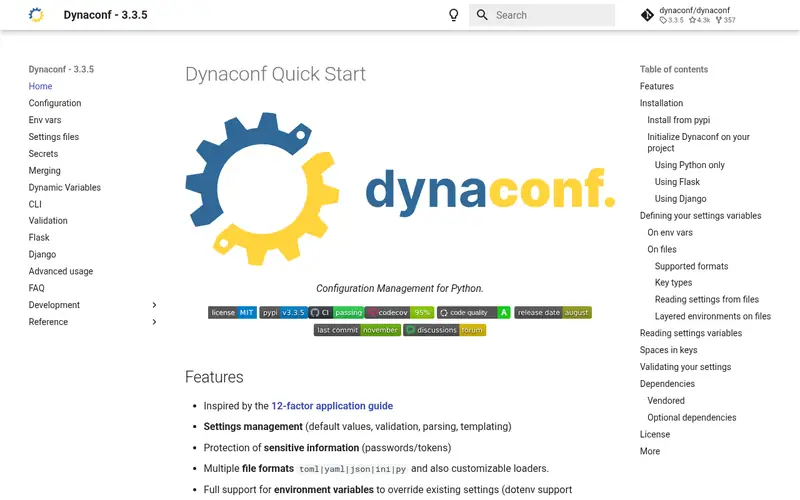
Dynaconf is a settings manager built for layered configuration. It reads from files in several formats, environment variables and vault-style sources, and it supports named environments such as development and production. You can override values per environment and merge defaults, which helps when one codebase ships to several deployments.
It runs on standard Python and integrates with common frameworks. The project is open source. There is no paid plan. The trade-off is complexity: the layering rules and environment switching take time to learn, and a misconfigured load order can produce values you did not expect.
Choose Dynaconf when you need file-based config with environment overrides and multiple formats. Skip it for a single small service that only reads a handful of environment variables, where a simpler loader is easier to reason about.
Standout: Layered settings files and environments
Free (open source), as listed by the vendor (Dynaconf website). Confirm the current plan price before you buy.
Free plan. Plans change, so confirm on the vendor's pricing page before you buy.
Benefits
- Layered settings files and environments
- Supports TOML, YAML, JSON and ini
Drawbacks
- More concepts to learn
- Defaults can be surprising in large projects
Skip it if this limit matters to you: more concepts to learn.
Verdict. A sensible pick for apps that need layered config across multiple environments.
Alternatives in this guide: pydantic-settings, python-decouple, Hydra
python-decouple
Best for small projects that read .env files and environment variables
What it is and where it fits
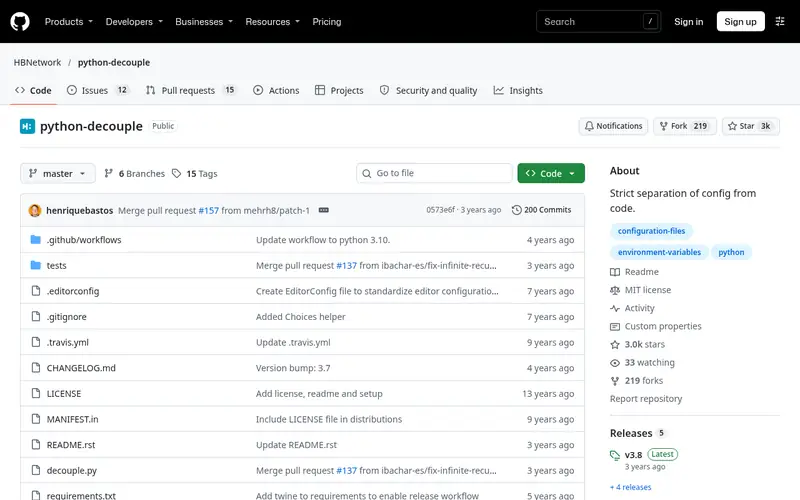
python-decouple reads configuration from environment variables and .env files and casts values to types such as int, bool and list. The API is small: you call a config object and ask for a key with a default and a cast. It keeps secrets out of source control by design, which is the main reason small projects adopt it.
It is open source and runs on standard Python. There is no paid tier. It does not validate a full settings schema, and it does not merge layered config files. If a required key is missing and you gave no default, you handle the error yourself.
Use it for small apps, scripts and simple web services where a full settings framework is overkill. Skip it when you need typed models, nested settings or multi-environment file layering.
Standout: Small API with cast helpers
Free (open source), as listed by the vendor (python-decouple website). Confirm the current plan price before you buy.
Free plan. Plans change, so confirm on the vendor's pricing page before you buy.
Benefits
- Small API with cast helpers
- Keeps secrets out of source code
Drawbacks
- No schema validation
- Limited to env vars and .env files
Skip it if this limit matters to you: no schema validation.
Verdict. A sensible pick for small projects that read .env files and environment variables.
Alternatives in this guide: pydantic-settings, Dynaconf, Hydra
Hydra
Best for machine learning and research code with many config combinations
What it is and where it fits
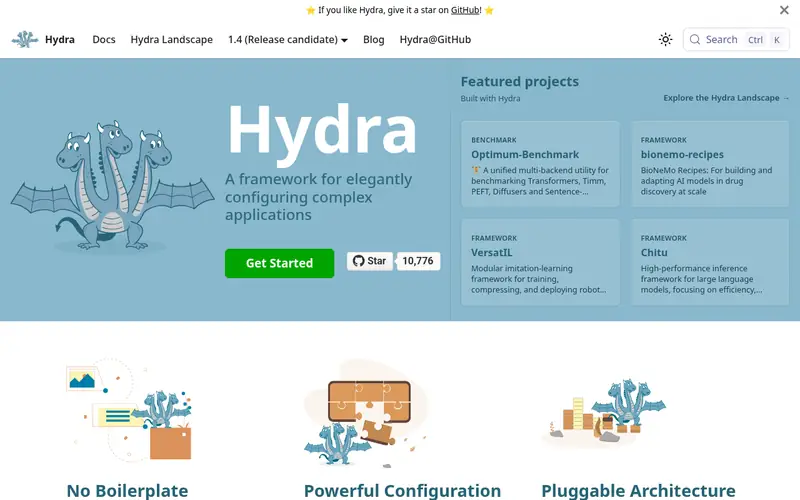
Hydra is a configuration framework from the team behind OmegaConf. It composes settings from grouped YAML files, lets you override any value from the command line, and can run the same code with many config combinations. It is widely used in machine learning and research pipelines where experiment settings change often.
It is open source and runs on standard Python. There is no paid plan. Hydra changes how your program starts, because it manages the working directory and the config composition. That structure is powerful for experiments but adds overhead for a simple service.
Pick Hydra when you need composable configs and command-line overrides for repeated runs. Skip it for a small web app or CLI where plain environment variables and one settings file are enough.
Standout: Composes configs from multiple files
Free (open source), as listed by the vendor (Hydra website). Confirm the current plan price before you buy.
Free plan. Plans change, so confirm on the vendor's pricing page before you buy.
Benefits
- Composes configs from multiple files
- Command-line overrides for runs
Drawbacks
- Aimed at complex experiment setups
- Steep learning curve for small apps
Skip it if this limit matters to you: aimed at complex experiment setups.
Verdict. A sensible pick for machine learning and research code with many config combinations.
Alternatives in this guide: pydantic-settings, Dynaconf, python-decouple
environs
Best for reading and validating environment variables with clear errors
What it is and where it fits
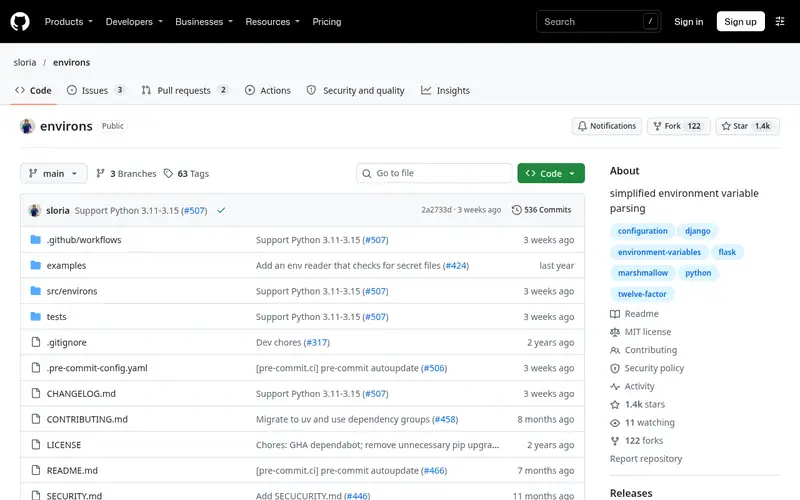
environs reads environment variables and .env files and parses them into typed Python values. It offers helpers for common types such as URLs, lists and booleans, and it raises clear errors when a value cannot be parsed. You can prefix variables to avoid collisions between services.
The library is open source and runs on standard Python. There is no paid tier. Its scope is environment variables and dotenv files, so it does not compose layered config files or manage multiple environments the way Dynaconf does.
Use environs when environment variables are your main config source and you want typed parsing with good error messages. Skip it if you need file layering or a full settings schema.
Standout: Typed parsing with helpful error messages
Free (open source), as listed by the vendor (environs website). Confirm the current plan price before you buy.
Free plan. Plans change, so confirm on the vendor's pricing page before you buy.
Benefits
- Typed parsing with helpful error messages
- Supports .env files and prefixes
Drawbacks
- Focused on env vars only
- No layered config files
Skip it if this limit matters to you: focused on env vars only.
Verdict. A sensible pick for reading and validating environment variables with clear errors.
Alternatives in this guide: pydantic-settings, Dynaconf, python-decouple
python-dotenv
Best for loading .env files into environment variables at startup
What it is and where it fits
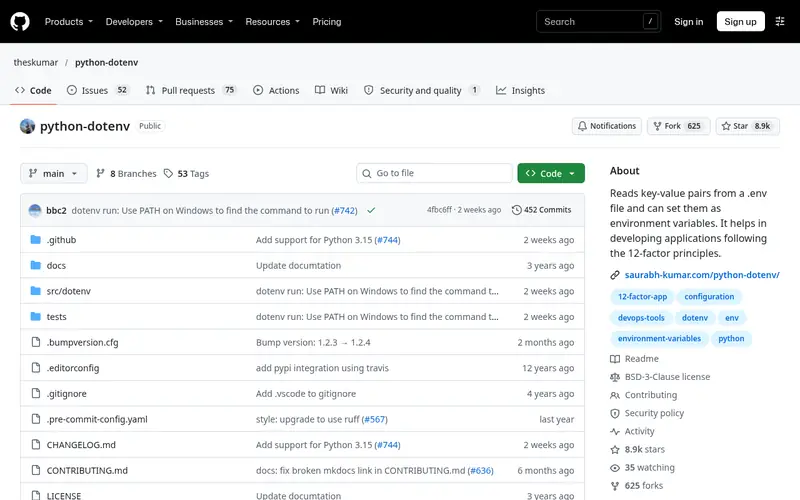
python-dotenv loads key-value pairs from a .env file into environment variables. It is often the first config tool a project adds, and many frameworks and CLIs read .env files through it. It can also be used from the command line to run a program with variables loaded.
It is open source and runs on standard Python. There is no paid plan. It does not validate types or schemas, and it does not merge layered files. It simply sets variables. Validation is left to your code or to a library such as pydantic-settings or environs.
Use it when you want a minimal loader and plan to validate values elsewhere. Skip it if you need typed settings out of the box, and never commit real .env files with secrets to a repository.
Standout: Simple and widely used
Free (open source), as listed by the vendor (python-dotenv website). Confirm the current plan price before you buy.
Free plan. Plans change, so confirm on the vendor's pricing page before you buy.
Benefits
- Simple and widely used
- Works with many frameworks and CLIs
Drawbacks
- No type validation
- Only loads key-value pairs
Skip it if this limit matters to you: no type validation.
Verdict. A sensible pick for loading .env files into environment variables at startup.
Alternatives in this guide: pydantic-settings, Dynaconf, python-decouple
ConfigArgParse
Best for cLI tools that combine config files, env vars and arguments
What it is and where it fits
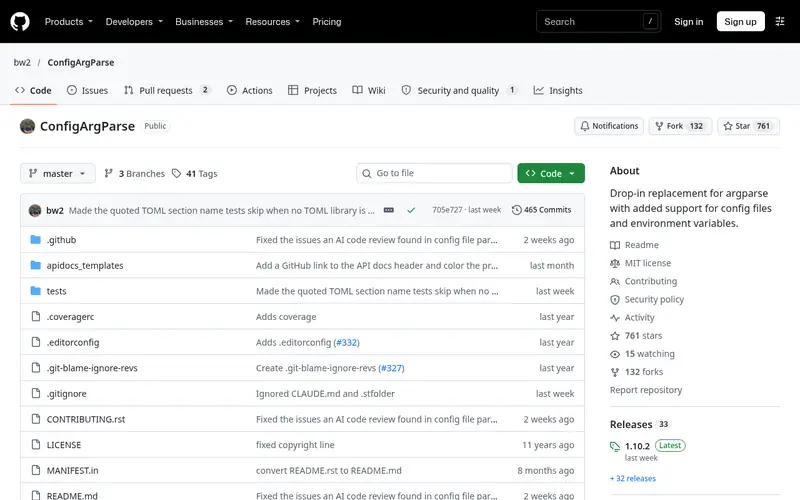
ConfigArgParse extends Python's argparse so a program can read settings from config files, environment variables and command-line flags in one place. It is a drop-in replacement for argparse, which keeps existing CLI code mostly unchanged. Precedence rules decide which source wins.
It is open source and runs on standard Python. There is no paid tier. It focuses on argument parsing and source merging, not on typed settings models or validation. Errors come from argparse conventions rather than a schema.
Choose it for command-line tools that need config files plus environment overrides. Skip it for web services or libraries that do not parse command-line arguments.
Standout: Drop-in replacement for argparse
Free (open source), as listed by the vendor (ConfigArgParse website). Confirm the current plan price before you buy.
Free plan. Plans change, so confirm on the vendor's pricing page before you buy.
Benefits
- Drop-in replacement for argparse
- Merges files, env vars and flags
Drawbacks
- Tied to argparse patterns
- Not a schema validation library
Skip it if this limit matters to you: tied to argparse patterns.
Verdict. A sensible pick for CLI tools that combine config files, env vars and arguments.
Alternatives in this guide: pydantic-settings, Dynaconf, python-decouple
Who should use what
If your team already uses Pydantic models, choose pydantic-settings for typed settings with startup validation. If you ship one codebase to several environments and need layered files, choose Dynaconf. If you run machine learning experiments with many config combinations, choose Hydra. If you only need to load .env files and environment variables, start with python-dotenv or python-decouple, and add environs when you want typed parsing. For CLI tools that merge flags, config files and env vars, use ConfigArgParse.
Questions to settle before you buy
What to check before you buy
- Confirm the library supports your Python version and deployment target.
- Decide whether you need typed validation or only key-value loading.
- Check how secrets are handled and keep real .env files out of version control.
- Review precedence rules so environment variables override files as intended.
- Read the licence and confirm the project is still maintained.
FAQ
Which Python configuration library is best for typed settings?
pydantic-settings is the common choice when you want typed fields and validation errors at startup. It fits projects already using Pydantic v2. For lighter typed parsing of environment variables only, environs is a good alternative.
Can I use these libraries together?
Yes. A common pattern is python-dotenv to load a .env file, then pydantic-settings or environs to parse and validate the values. Keep one source of truth for precedence so overrides behave predictably.
Are these libraries free?
All seven listed libraries are open source and free to use. None has a paid tier. You still pay for any hosting or secret management service you connect them to.
How do I keep secrets out of config files?
Store secrets in environment variables or a secret manager, not in committed files. Use .env files only for local development and add them to .gitignore. Libraries like pydantic-settings can read from secret sources directly.
Does Dynaconf replace environment variables?
No. Dynaconf reads environment variables as one source and also loads settings files. It layers and merges sources, so environment variables can override file values depending on your configuration.
Sources we checked
Method: how we score · editorial policy.
Change log. First published 27 Nov 2026.